Background Blur
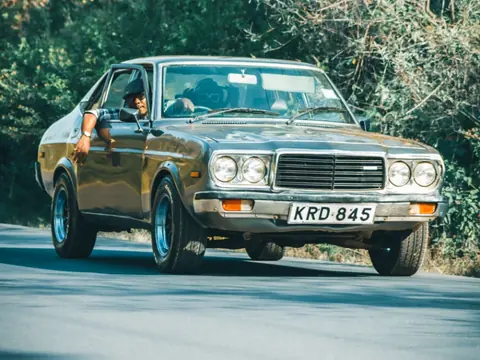
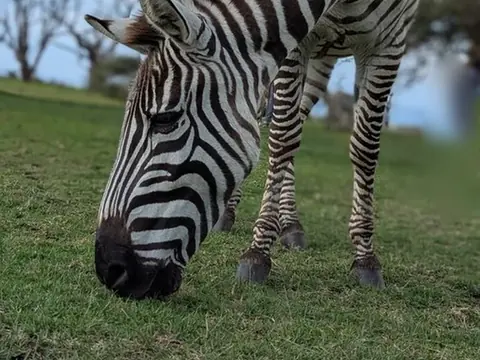
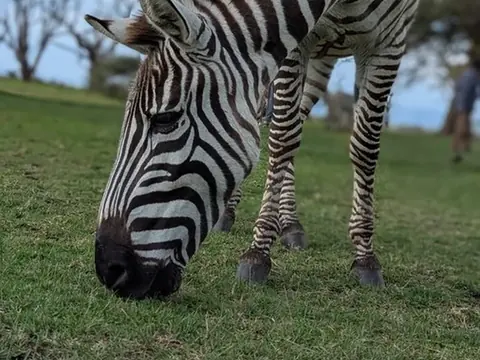
Get that phone-style portrait-mode look on any photo — the AI keeps your subject sharp and blurs the background for a clean depth effect. Free and 100% private.
Drop a photo
or click to browse — a clear subject (person, pet or product) works best

Drag to control how much the background is blurred.
Portrait mode for any camera
The AI finds your subject automatically — no manual masking or green screen.
Slide from a subtle depth effect to a strong, dreamy background blur.
Full-resolution JPG or PNG with your subject crisp and the background soft.
It all runs in your browser, so your photo never leaves your device — great for portraits that older phones or webcams shot flat.
How background blur actually works
Depth of field, and why phones fake it
Optical background blur — bokeh — comes from a wide aperture and a large sensor. Only one plane is truly in focus, and everything in front of or behind it falls off progressively. A full-frame camera at f/1.8 produces it naturally.
Phone sensors are tiny and their lenses have deep depth of field, so almost everything is sharp whether you want it or not. Portrait mode fakes the effect: the phone estimates a depth map, then blurs by an amount that varies with estimated distance. This tool does the same thing on any photo, after the fact.
Why the edges are the hard part
Simulated blur lives or dies on the boundary between subject and background. Real optical blur transitions gradually because the falloff follows actual distance; a naive mask blurs everything outside a hard outline by the same amount, which produces the cut-out look that gives portrait mode away.
The specific artefacts to check for: a halo of sharp background hugging the subject's outline, hair that has been blurred away with the background, and a foreground object at the same distance as the subject that got blurred anyway because it was outside the mask.
How much blur to apply
Less than feels right. The instinct is to push the slider until the background is unrecognisable, which reads as artificial immediately — real lenses rarely obliterate a background that completely at portrait distances.
A useful target is enough blur that background detail stops competing for attention but the setting is still legible. Somewhere around the point where you can tell it is a kitchen, but cannot read the labels.
What blur is good for
Beyond aesthetics, it solves practical problems: a cluttered room behind a video-call headshot, a distracting sign behind a portrait, or a busy street behind a product.
It is also a softer alternative to redaction when the background merely needs de-emphasising rather than hiding. If the background contains something that genuinely must not be readable — a screen, a document, a face — blur is the wrong tool, because it is reversible. Cover or crop those instead.
Preguntas frecuentes
How does the background blur work?
Is it free and private?
What photos work best?
Can I control how strong the blur is?
Más herramientas gratis y privadas
Exporta aquí y sigue editando allí — tu imagen te acompaña, sin volver a subirla.